What is Docker ?
Docker is a commercial platform that simplifies the process of deploying, building and running applications without any extraordinary setups using containers. Containers are the lightweight, portable and consitente environments that contain everything needed to run a piece of software, including the code, runtime, system tools, libraries and settings.
Key Features of Docker
- Client Server Architecture : Docker follows a client-server architecture. It communicates with a background process, the Docker Daemon, which does all the heavy lifting of building, running and managing your containers. Communication happens over REST API, via unix sockets.
- Dockerfile : Developers create Docker images by creating or writing a Dockerfile, which contains a set of rules and configurations on how to build the docker container.
- Ease of Use : It provides a simple and easy way to package application to share and deploy software for every third person.
What is Kubernetes ?
Kubernetes ( in short call as K8s), is an open source platform designed to automate the deployment, scaling and management of containerized docker applications, workloads and services . Originally developed by Google under Borg. Now it becomes the industry standard for container orchestration.
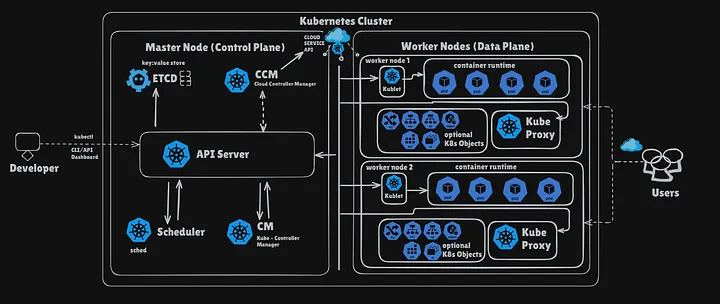
Key Features of Kubernetes
- Automated Orchestration: Kubernetes automatically manages the deployment, scaling, and operation of containerized applications, reducing manual workload for developers and operators.
- Self-Healing System: It continuously monitors container health and automatically restarts, replaces, or reschedules containers when they fail or become unresponsive.
- Scalability and Load Balancing: K8s allows seamless scaling of applications up or down based on real-time demand and efficiently balances network traffic across containers.
- Storage and Configuration Management: It provides flexible storage orchestration and manages secrets or configuration data securely without rebuilding your containers.
- Multi-Cloud and Extensible Platform: Kubernetes supports deployment across hybrid or multi-cloud environments and offers extensibility through APIs and plugins for custom workflows.
Comparing Kubernetes and Docker
Use Cases for Docker
- Development and Testing: Docker is ideal for building uniform environments across development and testing, ensuring applications behave the same everywhere.
- Lightweight Deployments: It’s highly effective for smaller projects or applications where managing multiple containers and orchestration isn’t a major requirement.
- Integration with CI/CD: Docker easily connects with CI/CD workflows, streamlining the automation of building, testing, and deploying applications.
Use Cases for Kubernetes
- Large-Scale Deployments: Kubernetes is designed to handle complex, large scale deployments across multiple servers.
- Microservices Architectures: Kubernetes excel in managing microservices architecture bcoz it supports auto-scaling and each service is deployed in its own container and scales independently.
- Cloud-Native Applications: It is ideal for cloud applications as it supports auto scaling and multi cloud deployments.
- Managed Services: All major cloud providers offer managed Kubernetes services, reducing the operational burden of maintaining the infrastructure.
Choosing Between Docker Swarm and Kubernetes
Keep the following in mind whether to use Docker Swarm or Kubernetes:
Docker Swarm
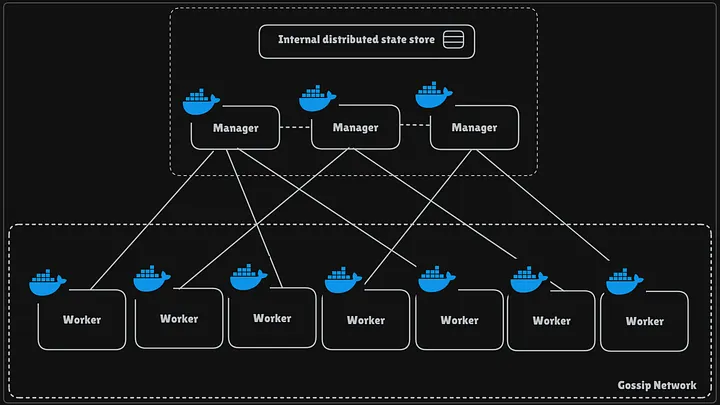
- Ease of Setup: Docker Swarm offers a faster and simpler setup process, needing minimal configuration to get started.
- Small Workloads: It’s well-suited for smaller projects or applications that don’t require complex orchestration features.
- Simple Infrastructure: Perfect for teams that want to maintain control over their infrastructure without dealing with the advanced setup and complexity of Kubernetes.
Kubernetes
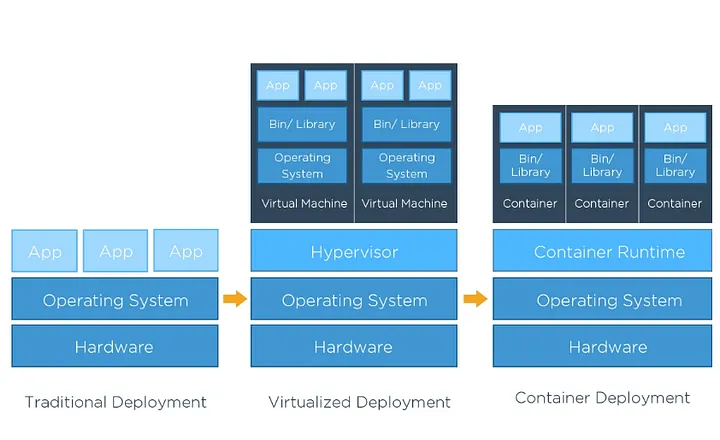
- Feature : Kubernetes offers a wide range of features out of the box, including multiple deployment strategies, network ingress management, and observability.
- Highly Scalable : It’s designed to handle complex, large-scale applications efficiently, making it ideal for enterprise-level workloads.
- Seamless Cloud Compatibility : Kubernetes integrates deeply with major cloud platforms, offering strong support for cloud-native applications and managed services.
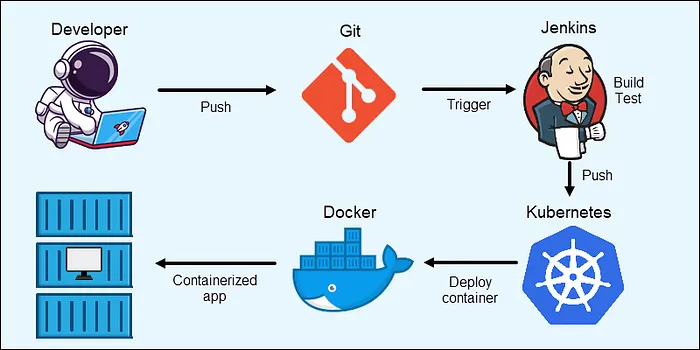
Docker serves as a powerful platform for building, packaging, and sharing containerized applications with consistency and ease. Kubernetes, in contrast, is a comprehensive orchestration system built to manage containers efficiently at scale.
For small or straightforward projects, Docker Swarm offers a simpler, quicker solution with minimal configuration. However, when dealing with large-scale, complex, or cloud-native environments, Kubernetes stands out as the ideal choice thanks to its scalability, flexibility, and rich ecosystem of features.
Thank You for reading. You can connect with me on Twitter and LinkedIn.